
Cocktail Bar Tables for Weddings: Sizing and Layout Tips
Nobody plans a seating chart for cocktail hour. That’s sort of the point of it. Guests wander, drift toward whoever they’re talking to, and set a glass down wherever there’s a flat surface at the right height. Which means the small standing tables scattered around the room are doing more quiet work than most planners give them credit for — and getting the count, height, and placement wrong is one of the easier mistakes to make, mostly because nobody thinks about it until the room already feels crowded or oddly empty.
How many tables you actually need
There’s a rough industry number worth starting from: one cocktail table for every 8 to 10 standing guests. Fewer than that and people end up holding drinks with nowhere to set anything down, which sounds minor until you watch a hundred guests all doing it at once. Too many tables and the room reads sparse, awkward, like the space wasn’t quite filled.
For a 100-guest cocktail hour, that lands somewhere around 10 to 12 tables. But the real number depends on room shape as much as headcount. A long, narrow space needs tables spread differently than a square ballroom — clustering three or four tables loosely instead of spacing everything in a rigid grid usually reads more natural and gives people room to actually walk between conversations.
Height and tabletop size matter more than people expect
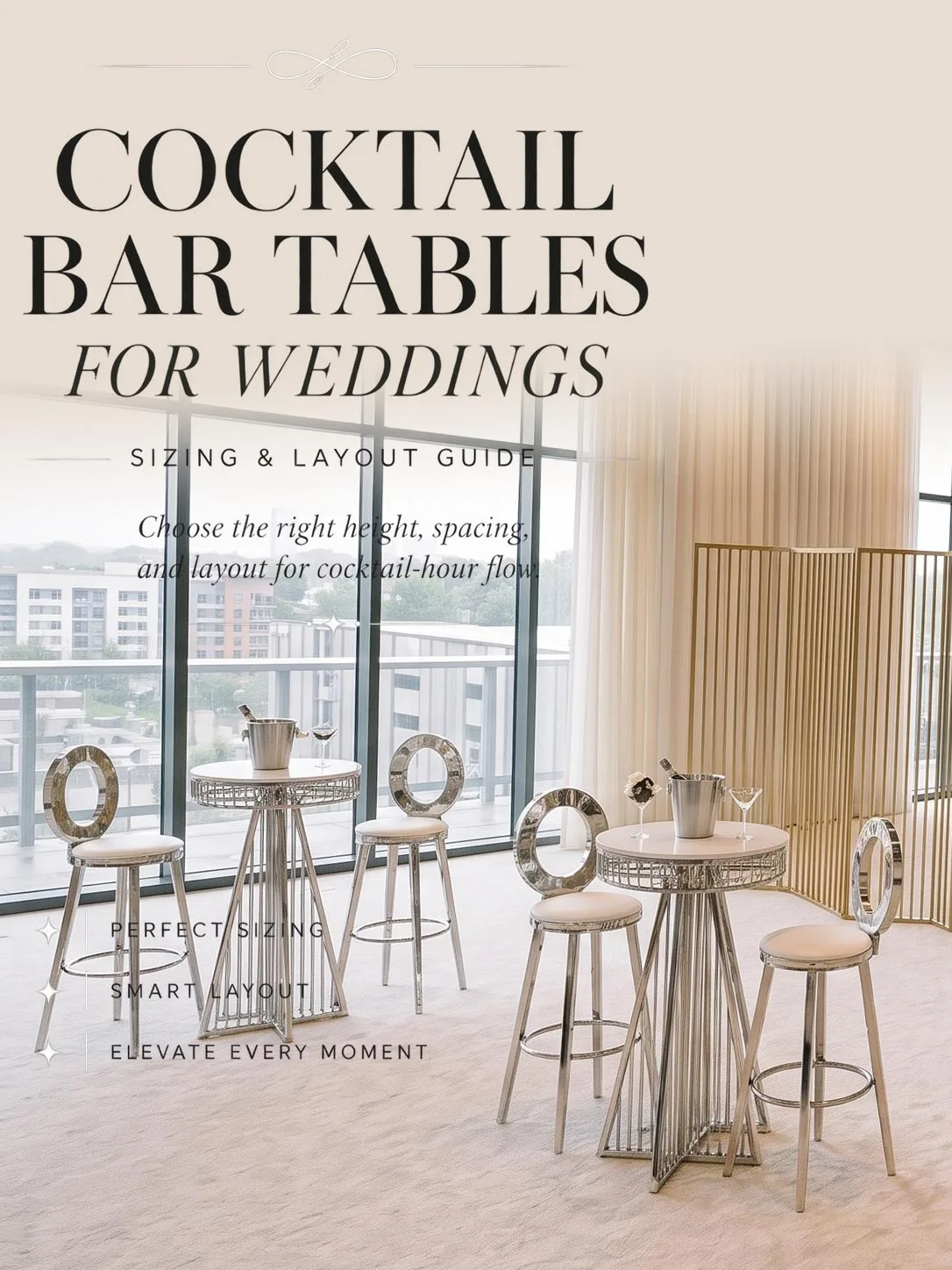
Standard bar-height cocktail tables run 105 to 110cm tall, which matches the counter height most venues use for actual bar service. That consistency matters. If your bar counter sits at 108cm and the cocktail tables scattered around the room sit at 95cm, the room feels visually off in a way most guests couldn’t name but would still notice.
Tabletop diameter is where a lot of buyers guess wrong. Anything under 60cm barely holds two drinks and a small plate before it feels cramped. 70 to 80cm gives four people enough room to set a glass down without elbows colliding, and it’s still small enough that groups don’t feel like they need to formally gather around it. Go much bigger than that and the table starts competing with the room’s actual dining tables for visual weight, which isn’t usually the goal for something meant to be a quick stopping point.
The stability problem nobody mentions upfront
Standing cocktail tables have a strange physics problem regular dining tables don’t. The center of weight sits high, the footprint is often small, and enough guests will lean on the edge without thinking about it. Add wind at an outdoor event or a slightly uneven floor and a poorly balanced table tips. Not often, but often enough that it’s worth checking before the order goes in rather than finding out at the venue.
A wider base plate helps more than people assume — a narrow X-base or single pedestal looks sleek but the physics work against it once four adults are all resting a forearm on the same edge. Weighted bases, or ones with a genuinely broad footprint at the floor, hold their ground much better. For anything going outdoors, this stops being a minor spec and becomes the actual deciding factor between a table that survives the reception and one that doesn’t.
Glass or MDF tops each come with their own trade-off here too. Glass reads more upscale under event lighting, but it adds weight up high on the frame, which actually helps stability a little, at the cost of being heavier to transport and more likely to chip at the edges in a crowded venue load-in. MDF is lighter and easier to move, but scratches show faster and it needs a sealed finish to survive spilled drinks over a full evening.
Where they actually get placed
Cocktail tables tend to cluster in a few predictable spots: near the bar itself so people have somewhere to land right after ordering, along the edges of a dance floor for guests who want to watch without standing in the open, and scattered through any lounge or mingling area separate from the seated dinner space. Placing a few near entrances and exits also gives people a natural spot to pause without blocking foot traffic, which matters more at larger events than most floor plans account for.
Before you place the order
Confirm the finish matches whatever bar counter or bar back pieces are going in the same room — a silver stainless frame next to a slightly different metal tone reads as mismatched under event lighting even when nobody could point to exactly why. Ask whether the base ships assembled or knock-down, since knock-down bases save on freight but add setup time that someone on your team needs to plan for. And if the event is outdoors, ask directly about wind resistance and base weight rather than assuming a table built for an indoor ballroom will hold up the same way on an open lawn.
Get the height, the tabletop size, and the base right, and cocktail tables become one of those pieces nobody notices — which, for a table whose whole job is to sit quietly in the background of someone else’s conversation, is exactly right. See the Bar Height Cocktail Table specs and request a quote here.