
Stainless Steel vs Acrylic Wedding Furniture: Cost, Look, and Maintenance Compared
Every couple of weeks, someone sourcing furniture for a wedding line lands on the same fork in the road. Stainless steel or clear acrylic? Both show up constantly in the same categories — bar stools, chairs, cocktail tables, display plinths — and both photograph beautifully in isolation. Put them side by side against actual use, though, and they behave pretty differently. Neither one is “better.” They’re just built for different jobs, and picking wrong shows up later, usually at the worst possible moment.
Where each one actually comes from, structurally
Stainless steel furniture is a frame-plus-covering system. A metal skeleton does the structural work, and whatever sits on top of it — a cushioned seat, a glass tabletop, an MDF panel — is along for the ride. That separation matters. If the fabric wears out or the top scratches, you’re replacing a surface, not the whole piece.
Acrylic, especially in the clear “ghost” style that’s become a cocktail-hour staple, doesn’t work that way. The legs themselves are the structure. There’s no hidden frame underneath a see-through stool or chair. That’s part of what makes it visually striking — nothing is hiding the shape — but it also means the whole piece lives or dies on how solid that molded acrylic actually is at the stress points.
Cost: not as simple as “acrylic is cheaper”
At the low end, molded acrylic pieces can undercut stainless steel on price, particularly for stools and simple chairs where the acrylic tooling is well established. But that gap narrows or reverses once you’re looking at anything load-bearing or large — a full-size acrylic dining table or a display plinth needs thick, high-grade acrylic to stay rigid, and that costs more than people expect walking in.
Steel scales more predictably. A stainless frame costs roughly what its gauge and finish suggest, and the price moves in line with size in a way that’s easier to plan around for a big order. Acrylic pricing can swing more depending on mold quality and clarity grade, and a cheap acrylic piece is more visibly cheap than a cheap steel piece — thin-gauge steel can still look reasonably solid under paint or plating, but thin acrylic looks thin.
How each one actually reads under event lighting
This is where the decision usually gets made in practice, not on a spreadsheet. Acrylic disappears. That’s the whole appeal — a clear ghost chair or a glass-clear cocktail table doesn’t compete with florals, linens, or a color scheme, because it isn’t introducing color of its own into the room. For a densely styled tablescape, or a room where 30-plus bar stools need to line a counter without visually cluttering the space, that’s a real advantage.
Stainless steel does the opposite. It’s a statement material — brushed steel reads industrial-elegant, polished steel reads glossy and formal, and either way it’s adding its own visual weight to the room rather than receding into it. That’s exactly right for a piece meant to be a focal point, like a gold-toned bar counter or a display plinth holding the wedding cake, and exactly wrong for something meant to blend in.
Worth noting: both materials show wear differently under lighting. Scratches and haze are far more visible on clear acrylic than on brushed steel, which tends to hide small imperfections rather than highlight them. A steel piece can look presentable well past the point where an acrylic piece of the same age would look tired.
Durability, weight, and what actually breaks first
Stainless steel wins on raw structural durability, and it isn’t close. A properly gauged steel frame holds its shape through years of repeated use, resists impact, and doesn’t degrade from UV exposure the way lower-grade acrylic can. If a piece is going to travel constantly between venues, get loaded and unloaded from a truck every weekend, and sit outdoors under direct sun, steel tolerates that abuse better.
Acrylic’s failure mode is different and, in some ways, more forgiving to spot before it becomes a real problem. Thin or hollow-molded acrylic flexes and clouds at stress points with use, which is visually obvious well before it becomes a structural risk — you’ll see the warning signs before something actually breaks. Steel’s failure mode is quieter. A frame with a hairline weld crack or a slightly bent leg can look completely fine right up until it doesn’t hold under weight.
Weight itself cuts in acrylic’s favor for anything that needs frequent moving. A rental team setting up and breaking down 40 stools every weekend will feel the difference between acrylic and steel by the end of the first month, even if the pieces are structurally similar otherwise.
Maintenance: different chores, not a clear winner
Stainless steel needs protection against fingerprints, water spotting, and — depending on the grade — corrosion if it’s used outdoors near coastal air or chlorinated pool decks. A lower-grade steel can develop surface rust at welds or joints over time, which is why the specific alloy (304 versus a lesser grade) actually matters for a piece with real outdoor exposure.
Acrylic’s enemy is abrasion, not corrosion. The wrong cleaning cloth, an aggressive cleaner, or just repeated contact from bottles, glasses, and hands wears micro-scratches into the surface faster than most buyers expect. Once acrylic starts clouding, there’s no polishing it back to new the way you can sometimes buff out a scratch in steel. Acrylic also needs UV-stable resin if it’s going anywhere near sun exposure regularly, since cheaper resin yellows over repeated outdoor use in a way steel simply doesn’t.
Neither material is low-maintenance. They just ask for different kinds of care, and a rental or venue team needs to actually follow through on the right one — acrylic-safe cleaner and soft cloths for clear pieces, and a proper metal polish (not an abrasive one) for steel.
Where the two actually get paired, not chosen between
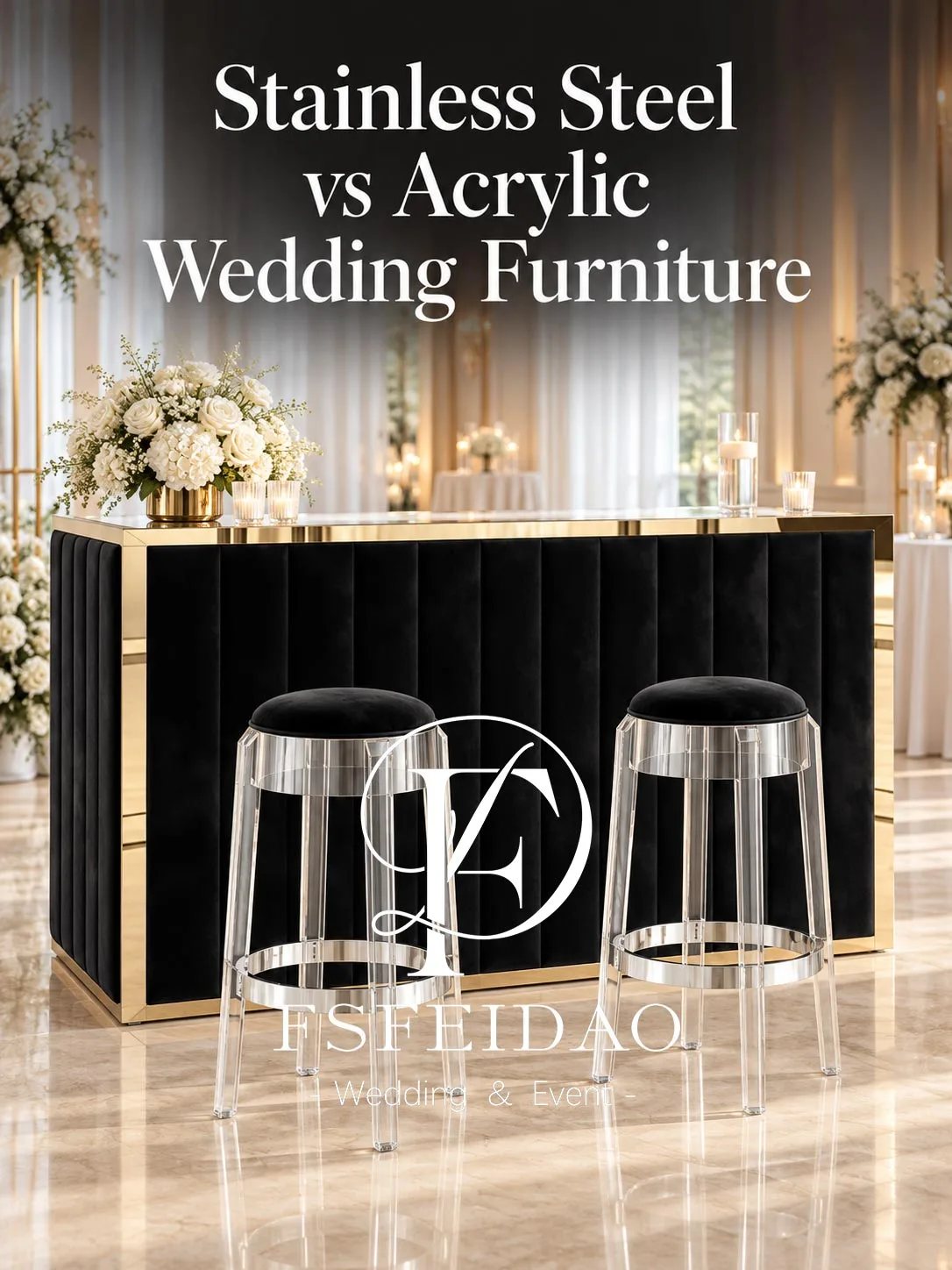
In practice, most well-put-together wedding setups don’t pick one material exclusively. A gold stainless steel bar counter often gets paired with clear acrylic bar stools, because the counter can carry visual weight as the anchor piece while the stools stay light and out of the way around it. Similarly, a stainless steel display plinth might hold a clear acrylic cake stand riser on top of it, combining structural steel underneath with a clear surface where the cake itself needs to be the visual focus.
The decision isn’t really “which material for the whole order.” It’s closer to: which pieces need to disappear into the room, and which pieces are supposed to be looked at directly. Bar counters, plinths, and backdrop frames tend to fall into the second category — they’re meant to be seen and to anchor the space. Stools, smaller cocktail tables, and secondary seating tend to fall into the first — they’re there to function without competing for attention.
A quick way to decide
If the piece is meant to be a focal point — a bar counter, a cake display plinth, a statement backdrop — stainless steel generally earns its cost through durability and visual presence. If the piece needs to blend into a busy, already-decorated space and get moved or stacked constantly, clear acrylic usually wins on both looks and practicality, provided the buyer checks thickness and UV-stable resin rather than assuming all acrylic is built the same.
For outdoor events specifically, steel’s resistance to sun and weather usually tips the decision, unless the piece in question genuinely needs to be visually invisible against the landscape.
Neither material is the “upgrade” version of the other. They solve different problems, and the pieces that actually work well together in a real event are usually a mix of both. Browse the full Feidao Furniture range to see which pieces fit your setup.