
Decor Display Plinths: Sizing Cakes, Flowers, and Centerpieces
A plinth has a simple job. Lift something so people actually see it. But that simple job hides a sizing problem that trips up a surprising number of orders — the same plinth that looks perfectly proportioned holding a small floral arrangement in a product photo can look wrong, or worse, become genuinely unstable, once it’s holding a five-tier wedding cake.
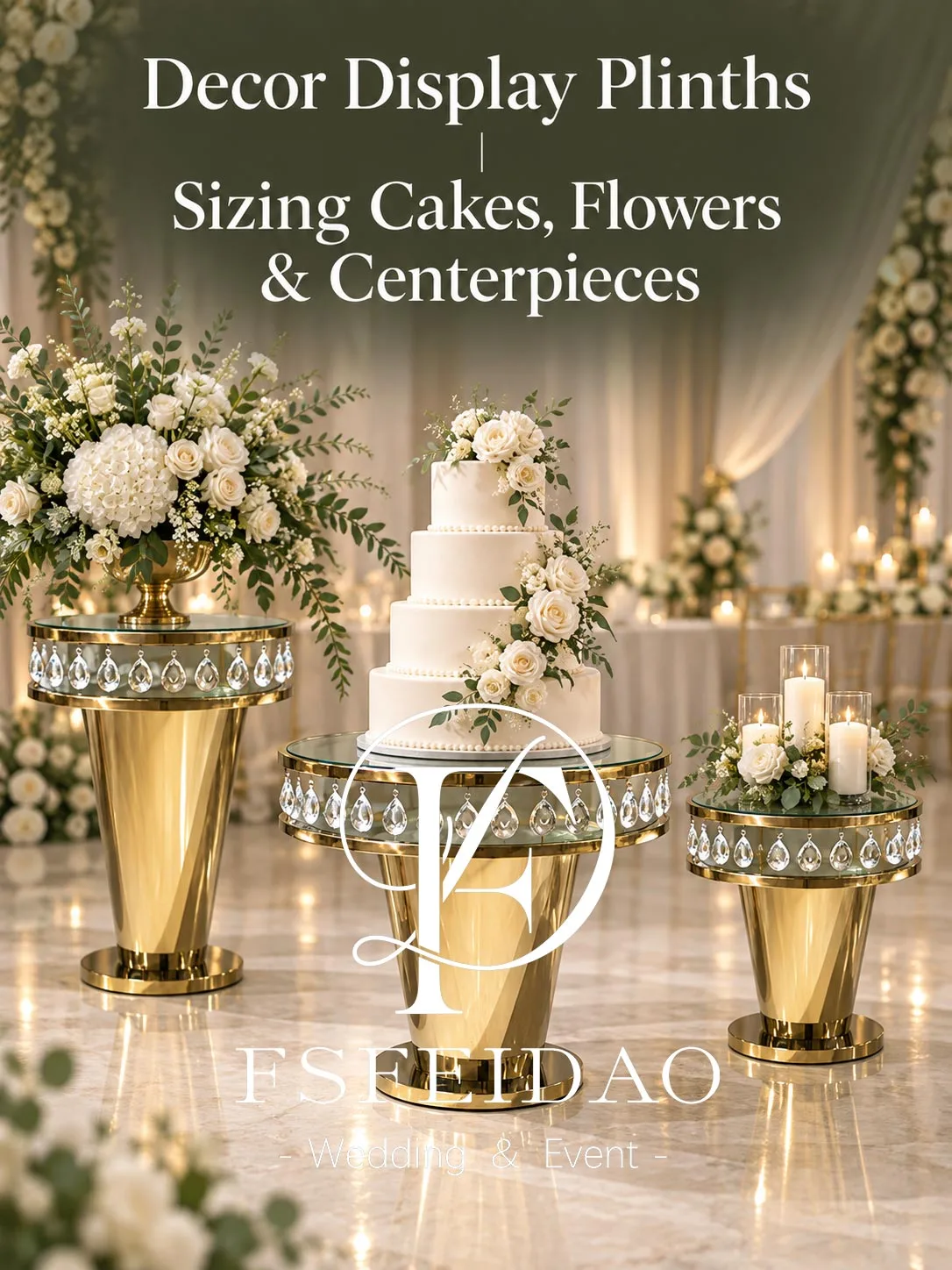
What’s actually sitting on top changes everything
Buyers tend to shop for a plinth the way they’d shop for a side table, thinking about height and finish first. But the real question is what’s on top, because a plinth holding a cake, a floral installation, or a centerpiece has completely different requirements.
A wedding cake needs a stable, level top with real weight capacity — a five-tier cake with structural supports can weigh 15kg or more, and it sits high on a single pedestal base, which is a very different load case than a vase of flowers. Floral installations are usually lighter but often wider and top-heavy, especially with cascading arrangements, so the concern shifts from raw weight to how far the display extends past the plinth’s actual footprint. Centerpieces sit somewhere in between, typically lighter and more compact, which is where buyers have the most flexibility on top size and height.
Height and top diameter, worked out properly
Standard plinths for wedding use run somewhere between 70 and 110cm tall, and the right height genuinely depends on the room and what’s on top. A cake plinth in a room with a low ceiling or an intimate seated arrangement usually sits lower, around 75- 85 cm, so the cake reads as part of the room rather than looming over it. In a grand ballroom with high ceilings, a taller plinth around 100- 110 cm holds its own against the scale of the space.
Top diameter matters more than people initially assume. A cake stand needs at least 5- 8 cm of clearance beyond the base tier’s diameter on all sides; otherwise, the cake reads as balanced precariously right at the edge, which photographs badly even when it’s structurally fine. Floral plinths need a wider top than the arrangement’s widest point at the base, since stems and greenery often flare out below the visible bloom line.
Weight capacity is not a detail to skip
This is the one that actually causes problems on the day of the event, not just in photos. A plinth’s weight rating needs real headroom above what’s expected to sit on it, not just enough to technically hold it still on a level, dry-run floor in a showroom.
Glass or MDF tops each carry a different practical ceiling. Glass reads more elegant and photographs beautifully under event lighting, but it’s less forgiving of an uneven venue floor, since even a slight wobble transmits differently through a rigid glass surface than through MDF. MDF flexes very slightly under load, which some buyers find actually helps it settle more evenly on an imperfect floor, at the cost of looking a bit heavier visually than glass does.
Base footprint deserves the same scrutiny it gets on bar counters and cocktail tables. A narrow pedestal base looks sleek and takes up less visual space in a tight tablescape, but the physics work against it once there’s real weight sitting up high, especially anything top-heavy like a tiered cake. A wider base, or a weighted base with a genuinely broad footprint at the floor, holds its ground far better — and for anything supporting a cake, this stops being a style preference and becomes the actual safety margin.
Placement and staging notes
Plinths tend to get placed where guests naturally gather to take photos — near the entrance to the reception, beside the head table, or as the visual centerpiece of a dessert display. Placing a plinth on a completely flat, hard surface matters more than it sounds; even a slightly soft or uneven floor covering, like a thick rug over an outdoor deck, changes how stable the base actually is once weight is added.
For events with multiple plinths — say, one for the cake and a few smaller ones for floral arrangements around the room — matching the finish across all of them keeps the room reading as one coordinated design rather than a collection of separate pieces bought at different times.
Before you place the order
Confirm the actual weight rating, not just the visual weight capacity implied by the base design, and ask specifically about the cake or arrangement weight you’re planning for. If ordering multiple plinths for one event, request them from the same production batch to avoid subtle finish or color variation showing up side by side. And double-check top diameter against the exact item going on it, since a plinth sized for a floral display often can’t be repurposed for a cake without looking visibly mismatched.
Get the height, the top diameter, and the weight capacity right, and a plinth does exactly what it’s meant to do — lift the display, hold it steady, and disappear into the background of every photo taken in front of it. See the Display Plinth specs and request a quote here.