
On paper, a hotel ballroom is the easy setting. The floor is flat, the room is climate-controlled, and nobody has to think about sand or sprinklers. So it surprises people when the furniture still causes trouble.
The reason is simple. In a ballroom, you’re not the only one handling your furniture. The hotel’s banquet team is, and they work under their own rules, schedules, and carts. If your pieces don’t fit that system, you feel it on the day. Here’s what to think about before you order.
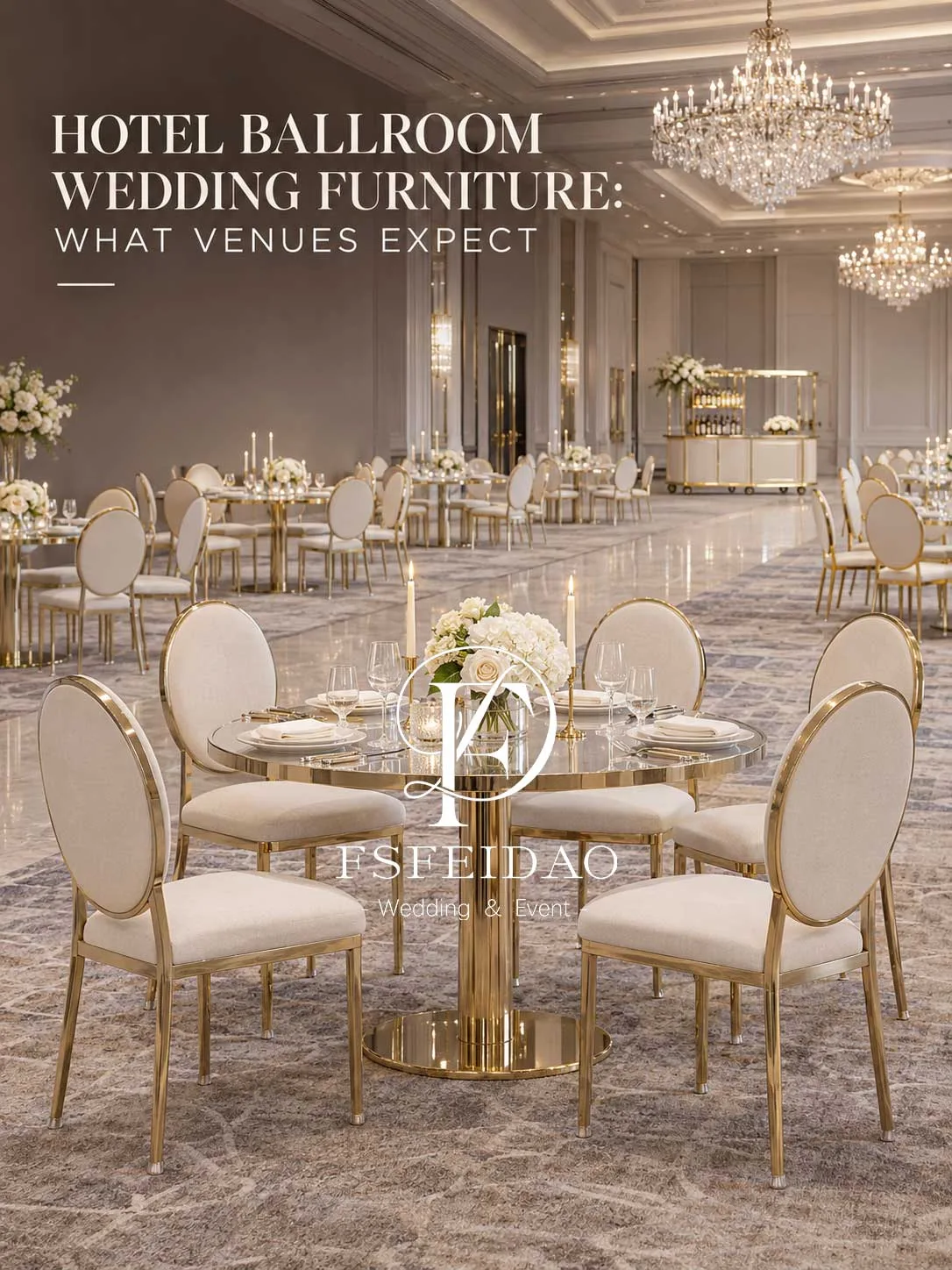
Who actually moves your furniture
At many hotels, banquet staff set up and break down the room. They move chairs on carts, stacked, and they do it fast. That changes what “good furniture” means.
Can the chairs stack? If so, how high? Stacking is great for storage, but metal frames rub against each other, and plated finishes like gold can scratch. Ask whether the supplier uses padding or covers between stacked pieces, and how the frames are designed to rest on each other.
Chairs that don’t stack get moved a few at a time. That’s slow, and in a tight turnaround, slow causes problems. Our guide to matching chairs to table bases covers how heights and finishes line up, which helps when staff are setting dozens of seats quickly.
Protect the floor and the finish
Ballrooms usually have carpet, marble, or wood. All three show damage. Dragging a chair across marble leaves marks, and narrow metal feet can dent soft flooring.
Ask what feet or glides the furniture has. Non-marking pads are common, but you should confirm. Also think about the route. Carts roll over door thresholds and elevator gaps, and heavy pieces like glass-top tables or display racks take more care.
Venues notice floor damage, and some charge for it. A few cheap felt pads can prevent a long conversation later.
Every hotel has its own rules
This is the part nobody can answer for you. Hotels set their own policies, and they differ a lot. Common areas to ask about:
- Fire safety: how wide aisles and exits must stay, and how far apart tables should be.
- Fabrics: whether the venue requires flame-retardant materials, and whether they want proof.
- Outside vendors: whether they need insurance certificates, an approved vendor list, or advance notice.
- Fees: whether there are charges for outside furniture or extra handling.
Get these answers in writing, early. We can’t tell you the rules, because they aren’t the same everywhere, and guessing is a bad idea. A quick call to the hotel’s banquet manager answers most of it.
Load-in and load-out windows
Hotels often run several events a day. Your window to bring things in, set up, and clear out can be tight, sometimes just a few hours.
Ask about the loading dock and the freight elevator. Can your biggest piece fit through the doors? Does it come apart? Pieces that break down compactly save time, and sets that arrive packed together save even more, since staff isn’t hunting for matching parts.
Label things. When forty identical chairs and fifteen tables arrive at once, a simple labeling system helps the room go together right the first time.
Consistency matters at scale
A ballroom shows every difference. Twenty tables in a row make a slight height gap or a shade mismatch obvious. Order matching pieces from the same batch where you can, and confirm finishes side by side. Also order a few spares, because chairs get chipped or damaged during setup, and a missing piece in a long row stands out.
Look up before you design
Ceilings in ballrooms are high, but they’re not empty. Chandeliers, sprinklers, projector screens, and lighting rigs all limit what you can put overhead. Tall backdrops and high floral installations need clearance, and many venues have rules about keeping items away from sprinklers and fixtures. Ask for the ceiling height and any restrictions before you choose a backdrop. Our guide to backdrop stands covers stability and sizing.
Lights change how furniture looks
Ballroom lighting can be strong and colorful. Glass and mirror finishes pick up glare in photos, and colored uplighting can shift how gold or silver looks. If you can, check samples under the lighting the event will use, not just in daylight.
If your ballroom setup includes a bar or lounge, the same height and sizing rules apply as anywhere else. Our guides to bar counters, cocktail tables, and wedding sofas can help.
A quick ballroom checklist
- Ask whether chairs stack, how high, and how they’re protected.
- Confirm feet or glides won’t mark the floor.
- Get the hotel’s fire, fabric, and vendor rules in writing.
- Check the loading dock, elevator size, and time window.
- Choose pieces that break down compactly and label everything.
- Order matching batches and a few spares.
- Ask about ceiling height and fixtures before choosing a backdrop.
- Test finishes under the event’s actual lighting.
None of this is hard. It’s a matter of asking the right questions before the order goes in, so the banquet team can do their job without surprises. If you’re building an inventory for hotel events, browse the full Feidao Furniture range and start with the pieces that stack, move, and match easily.